

A Parallel Show Gains Momentum
Just minutes before kickoff hype reached its peak, a different storyline began to surge online. It wasn't tied to the official broadcast. It didn't appear in network promos. Yet within hours, social feeds were flooded with discussion of an independent, message-driven "All-American Halftime Show" set to stream during the same halftime window.
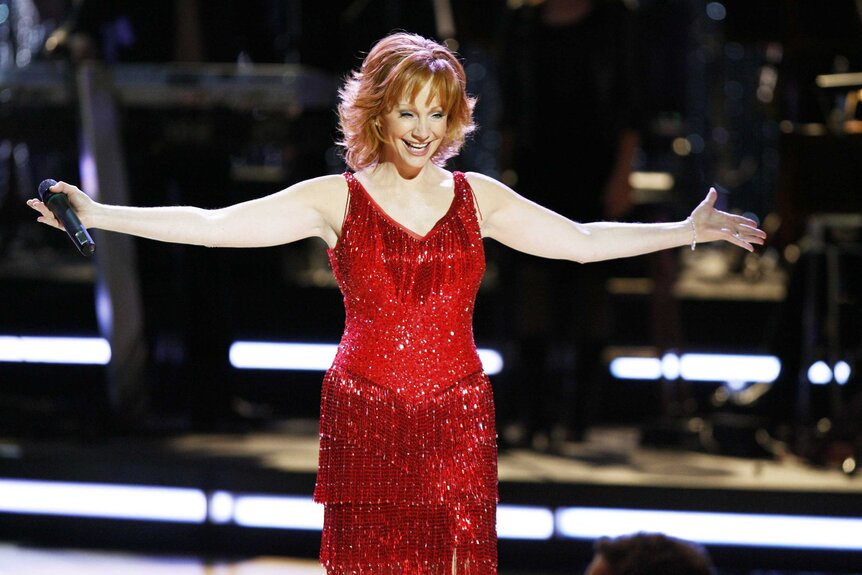
At the center of the speculation were two names that carry decades of cultural weight: Reba McEntire and Dolly Parton.
The idea was bold: while the NFL's official halftime show aired through its traditional channels, an alternative performance would run simultaneously through digital streaming platforms—framed as a celebration of faith, family, and country.
What began as whispers quickly transformed into trending headlines.
Not a Broadcast—A Bypass
The most striking element of the conversation was structural rather than musical. This was not presented as a rival event scheduled for another night. It was positioned as a concurrent experience—an alternative feed designed to exist alongside the official halftime.
Media analysts described it as a "parallel broadcast moment," reflecting a broader shift in how audiences consume live events. Streaming platforms have increasingly allowed creators to operate outside traditional network frameworks, building audiences without relying on broadcast gatekeepers.
If the concept materialized as described, it would represent more than an artistic choice. It would signal how major cultural events can now be shadowed—sometimes even challenged—through digital routes.
Why Reba and Dolly?
The pairing of McEntire and Parton is more than a booking decision. Together, they represent a lineage within American country music—two artists whose careers span decades, genres, and generational divides.
Parton's songwriting has long bridged rural narratives with global audiences, while McEntire's catalog has built emotional resonance through clarity and restraint. Both artists command loyalty that extends far beyond streaming statistics.
Industry observers note that their combined presence carries symbolic weight. For some viewers, they embody tradition and continuity. For others, they represent authenticity in a rapidly evolving music landscape.
In either case, their names alone were enough to accelerate attention.

A Cultural Lightning Rod
Within hours of the announcement's circulation, reactions polarized. Supporters framed the concept as a reclamation of values—an opportunity to spotlight artists associated with longstanding American themes. Critics questioned whether the move was less about music and more about positioning within a broader cultural debate.
What is clear is that the "All-American Halftime Show" has become a lightning rod precisely because it intersects entertainment with identity.
The Super Bowl has historically functioned as a shared national moment. Any attempt to create a simultaneous alternative experience inevitably invites discussion about representation, narrative control, and audience segmentation.
The Mechanics of Viral Momentum
Unlike official halftime promotions, which unfold through scheduled press releases and coordinated campaigns, this storyline gained traction through organic repetition. Influencers reposted graphics. Commentators speculated on setlists. Fans debated possible opening songs.
The phrase "takeover" began appearing in captions—not necessarily to describe confirmed logistics, but to capture the intensity of online engagement.
Digital communication experts point out that speed often outpaces verification in such cases. The emotional resonance of two iconic names attached to a major event can propel a rumor or proposal forward before infrastructure details are fully clarified.
In the streaming era, possibility alone can trend.
Music as Message
The framing of the event as "message-driven" added another layer. Rather than promising spectacle—pyrotechnics, surprise cameos, viral choreography—the concept emphasized thematic focus.
Sources close to organizers described an opening duet centered on unity and enduring values. While specifics remain unconfirmed, the narrative positioned the show less as entertainment and more as statement.
For artists like McEntire and Parton, whose careers have consistently leaned on storytelling rather than shock value, such framing aligns with their public personas.
Both have built reputations on emotional accessibility rather than controversy.
The Economics of Parallel Programming
Beyond cultural symbolism, the idea of a concurrent streaming event raises economic questions. Advertisers, sponsors, and digital platforms increasingly compete for attention during peak live-viewing windows.
If an alternative halftime feed attracted substantial viewership, it could demonstrate how audience loyalty can fragment—even during events traditionally considered unified.
Industry analysts caution, however, that scale matters. The official halftime show benefits from decades of brand alignment and broadcast reach. Any independent stream would require significant technical infrastructure and promotional clarity to rival that presence.
What It Means for the Super Bowl Narrative
Whether the alternative show proceeds as described or remains largely digital conversation, its impact on the halftime narrative is already visible. Instead of one storyline dominating headlines, multiple threads now compete for interpretation.
This reflects a broader transformation in media consumption. Viewers no longer experience events exclusively through a single channel. They toggle between feeds, compare perspectives, and shape discourse in real time.
In that environment, even speculation can influence perception.
The Power of Symbolic Pairing
Ultimately, the selection of McEntire and Parton—confirmed or speculative—demonstrates how symbolic capital operates in entertainment. Their combined legacies evoke nostalgia, continuity, and emotional trust.
For supporters, that trust translates into credibility. For critics, it raises questions about intent. Either way, their presence anchors the conversation in something familiar amid rapidly shifting media dynamics.
A Moment Still Unfolding
As kickoff approaches, official details remain limited. Networks continue with their scheduled programming. Streaming chatter continues to accelerate. The possibility of a second halftime narrative exists in parallel with the first.
What is undeniable is the scale of attention generated within a remarkably short window.
In an era defined by digital immediacy, cultural moments are no longer confined to broadcast schedules. They evolve across platforms, shaped by audience response as much as official planning.
If the "All-American Halftime Show" materializes, it will not simply compete for attention.
It will illustrate how influence now travels—through streams, shares, and the enduring power of names that carry decades of meaning.
And if it remains largely symbolic, it will still stand as evidence of a changing media landscape—one where a rumor, a pairing, and a parallel stream can redefine the conversation surrounding the biggest stage in sports.