

Some artists build careers by chasing the next big moment.
Others spend years creating music that makes the next generation look back and ask how a voice could have carried so much feeling in the first place.
Chris Stapleton belongs firmly in the second category.
He has become one of the defining voices of modern country music, but his story was never an overnight success. Long before sold-out arenas and major awards, Stapleton was a songwriter, guitarist and band member working largely outside the spotlight.
He learned the music before he became famous for it.
That distinction remains important.
Because when Chris Stapleton walks onto a stage today, audiences aren’t simply hearing a successful country singer.
They are hearing decades of experience compressed into one voice.
There is grit in it.
There is warmth.
There is vulnerability.
And, when the song demands it, there is an almost overwhelming power.
But the most remarkable thing about Stapleton may be how little his success has changed the fundamental character of his music.
He still sounds like someone who believes the song comes first.
That philosophy was established long before Traveller became a breakthrough phenomenon.
Stapleton spent years writing songs for other artists and performing with groups including the SteelDrivers and the Jompson Brothers. He became highly respected within Nashville’s songwriting community while remaining relatively unknown to the mainstream audience.
For many musicians, that period might have felt like waiting for a career to begin.
For Stapleton, it was the career.
He was learning.
Writing.
Touring.
Playing.
Failing.
Improving.
And gradually developing the artistic identity that would eventually make him one of country music’s most respected performers.
Then came Traveller in 2015.
The album changed everything.
It introduced millions of listeners to an artist who sounded strikingly different from the polished image often associated with modern country radio.
The guitars were prominent.
The arrangements left space.
The influences of blues, Southern rock, soul and traditional country were impossible to miss.
And at the center was Stapleton’s voice.
It didn’t sound manufactured.
It sounded lived-in.
That quality immediately separated him from the crowd.
His unforgettable performance with Justin Timberlake at the 2015 CMA Awards accelerated that transformation.
For viewers who had never heard Stapleton before, the performance felt like a discovery.
For musicians who had followed his career, it felt more like a long-overdue recognition.
Suddenly, the songwriter who had spent years working behind the scenes was standing at the center of country music’s biggest conversation.
But success didn’t cause him to abandon the qualities that made him special.
Instead, it amplified them.
Songs such as “Tennessee Whiskey,” “Broken Halos,” “Fire Away” and “Starting Over” became powerful examples of his ability to combine technical excellence with emotional honesty.
“Tennessee Whiskey” is particularly revealing.
Stapleton didn’t write the song.
The composition had already been recorded by other artists, most famously David Allan Coe and George Jones.
But Stapleton’s version gave the song a new life and introduced it to an enormous audience.
He didn’t need to overcomplicate it.
He simply trusted the emotion.
That has become a recurring theme throughout his career.
Stapleton understands that the strongest performance is not necessarily the loudest one.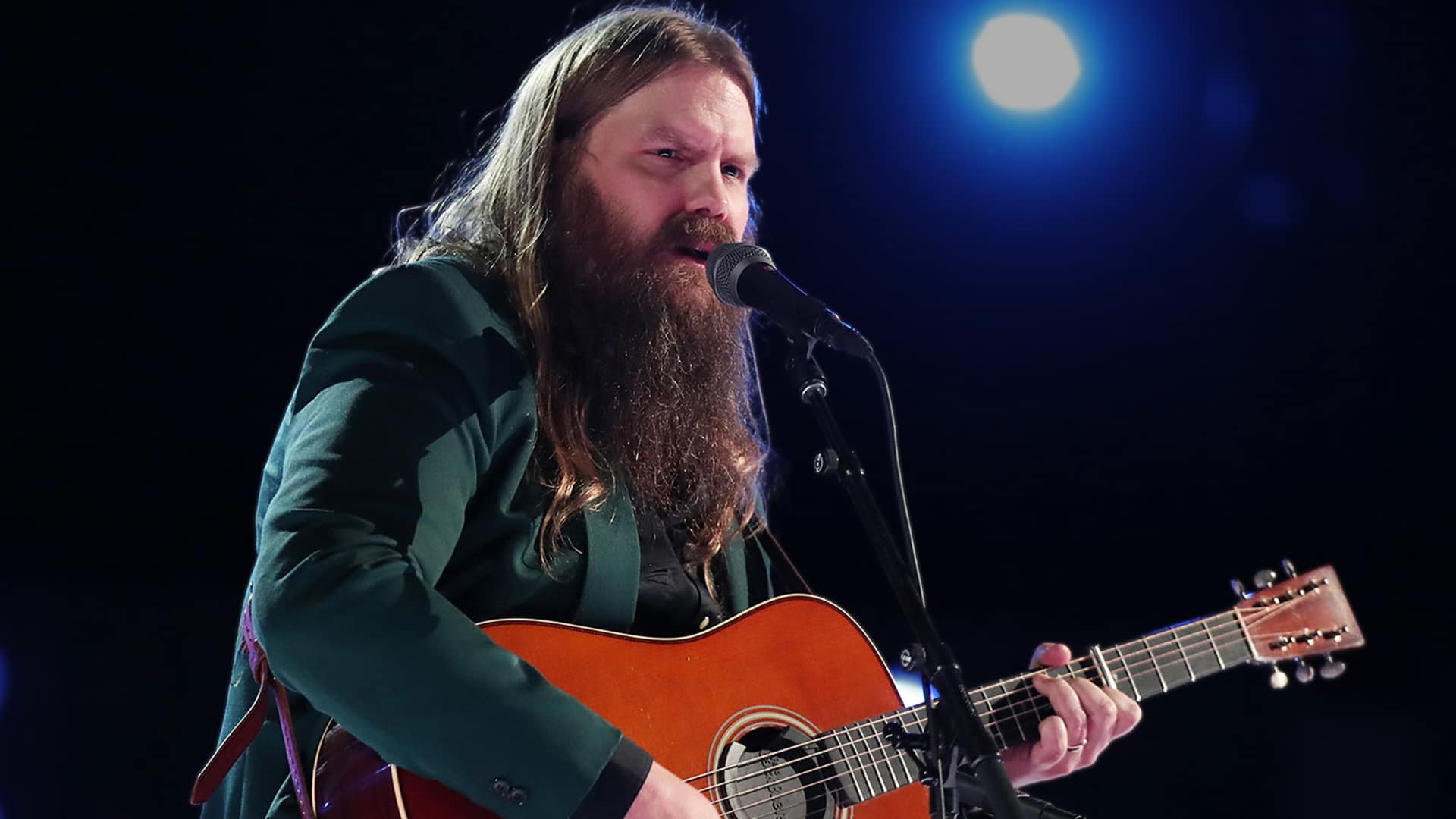
Sometimes restraint is more powerful.
Sometimes a cracked note communicates more than perfect technique.
Sometimes the silence between two lines says as much as the lyrics themselves.
That emotional intelligence has helped him build a remarkably diverse audience.
Country listeners recognize his roots.
Rock fans hear the guitars.
Blues listeners hear the phrasing.
Soul audiences respond to the warmth in his delivery.
And songwriters recognize the craftsmanship underneath it all.
His music crosses boundaries without seeming desperate to do so.
That’s important in an era when genre lines have become increasingly fluid.
Stapleton doesn’t need to announce that he is crossing genres.
He simply makes music.
The result is a sound that can exist comfortably in a Nashville theater, a massive arena, a festival field or a quiet room with nothing but a guitar.
That versatility has also shaped his live performances.
There may be large stages and sophisticated production, but the emotional center remains remarkably simple.
Stapleton sings.
His band responds.
The audience listens.
Then, often, thousands of people begin singing back.
Those moments can be astonishing because they demonstrate just how deeply the songs have traveled.
A song that began as words on a page can eventually become part of thousands of people’s personal histories.
Someone hears “Starting Over” and thinks about rebuilding a life.
Someone hears “Fire Away” and remembers a relationship.
Someone hears “Tennessee Whiskey” and remembers a person they loved.
The artist may have written the song years earlier, but the listener has given it another life.
That is what legacy really looks like.
It isn’t only about awards.
It isn’t only about chart positions.
It isn’t even necessarily about commercial success.
Legacy is what remains when the performance ends.
Stapleton’s career has already reached that point.
His influence can be heard in younger country artists who are increasingly comfortable bringing blues, soul and rock influences into their music without abandoning country storytelling.
His success also demonstrated that audiences were still hungry for something organic.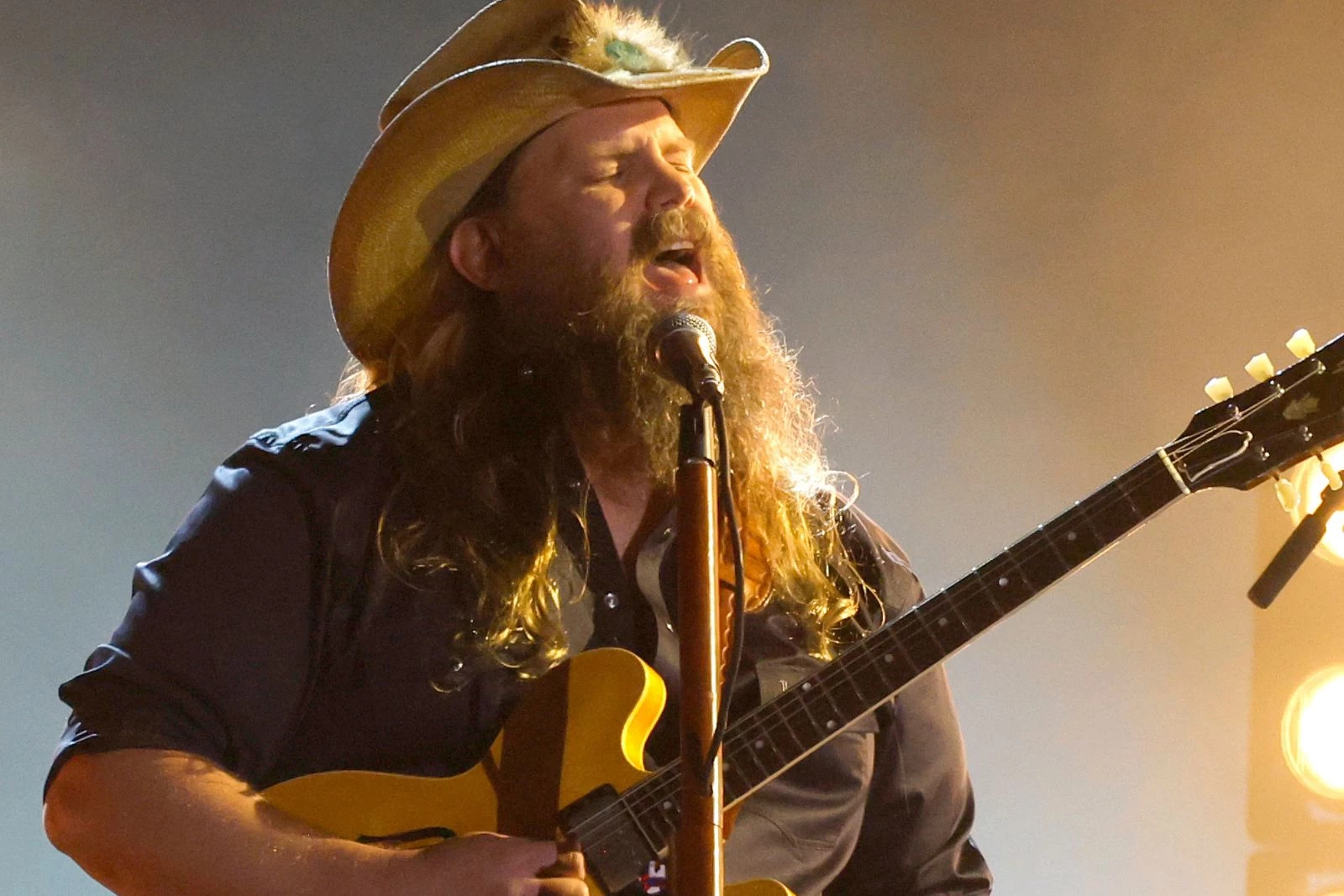
At a time when production can be almost impossibly polished, Stapleton reminded listeners that imperfections can be beautiful.
A human voice can be enough.
A guitar can be enough.
A great story can be enough.
And an artist doesn’t need to reinvent himself every year to remain relevant.
Sometimes, authenticity is the reinvention.
That may be the most exciting thing about Stapleton’s continued journey.
He is no longer the relatively unknown songwriter Nashville insiders admired.
He is no longer the surprise of the 2015 awards season.
He is now an established artist with the freedom to explore, experiment and continue refining his sound.
Yet the foundation remains unchanged.
The songs still matter.
The musicianship still matters.
The story still matters.
And the voice remains unmistakable.
Chris Stapleton’s career is therefore not a story about someone who suddenly became famous.
It is a story about someone who spent years becoming ready for the moment when the world finally listened.
That moment came.
The world listened.
And it hasn’t really stopped.
Now, with years of experience behind him and countless songs still waiting to be written, Stapleton enters the next chapter with something more valuable than novelty.
He has perspective.
He knows who he is.
He knows what his music means.
And he knows that the best way forward is often the same path that brought him here in the first place.
Pick up the guitar.
Tell the truth.
Sing the song.
And let the music speak.
Because some voices don’t need to rise again.
They never really went away.


