

Long before Chris Stapleton became one of the most recognizable voices in American roots music, there was a much simpler dream: write songs, play guitar, stand onstage and make people feel something.
That journey is one reason Stapleton’s music continues to resonate so deeply.
His story did not begin with sold-out stadiums or Grammy Awards. It began with years of work, small stages, songwriting rooms and the kind of persistence that rarely makes headlines.
By the time mainstream America discovered Stapleton through Traveller in 2015, he had already spent years building a reputation inside Nashville’s musical community.
He had learned that success in country music rarely arrives overnight.
Sometimes, it takes years of playing for people who don’t know your name.
Sometimes, it means writing a song that becomes a hit for somebody else while your own voice remains largely unknown.
And sometimes, it means continuing to chase the music simply because you cannot imagine doing anything else.
That last idea may be the closest description of Stapleton’s career.
Born in Lexington, Kentucky, Stapleton grew up surrounded by music and developed an early interest in songwriting and guitar. Eventually, Nashville became the destination.
But the Nashville he entered was not waiting for a superstar.
It was waiting for a working musician.
Stapleton became part of the city’s songwriting culture, writing songs that would later be recorded by artists including Kenny Chesney, Luke Bryan, Josh Turner and others.
His work behind the scenes helped establish his credibility long before his name became a household one.
That history is important because it changes the way listeners hear his early recordings.
Stapleton wasn’t suddenly discovering country music when Traveller arrived.
He had already lived it.
His years with The SteelDrivers brought bluegrass and Appalachian influences into his musical vocabulary. Later, the Jompson Brothers allowed him to explore a harder Southern-rock edge.
Those experiences eventually became part of the distinctive sound that audiences recognized in his solo career.
When Traveller arrived, it felt less like a debut than a musician finally opening the door to a room he had been preparing for years.
The album contained heartbreak, loneliness, love, memory and the restless feeling of someone constantly moving forward.
Its success transformed Stapleton from respected Nashville songwriter into a major country star.
But the underlying philosophy remained remarkably simple.
The song comes first.
That principle helps explain why Stapleton has never seemed particularly interested in fitting neatly into one musical category.
Country is at the center of his work, but blues, soul, rock, gospel and bluegrass all have a place in his sound.
He can move from a delicate ballad to a roaring blues performance without making the transition feel unnatural.
His voice is the common thread.
There is grit in it, but also tenderness.
There is power, but rarely unnecessary force.
He can sound like a singer standing alone in a small bar and, moments later, like someone capable of filling an entire stadium.
That contrast is one of the reasons his live performances have become so highly regarded.
Stapleton doesn’t need to surround every song with spectacle.
A guitar and a microphone can be enough.
The audience already knows what they are waiting for.
That moment when the first line arrives and the room suddenly becomes quiet.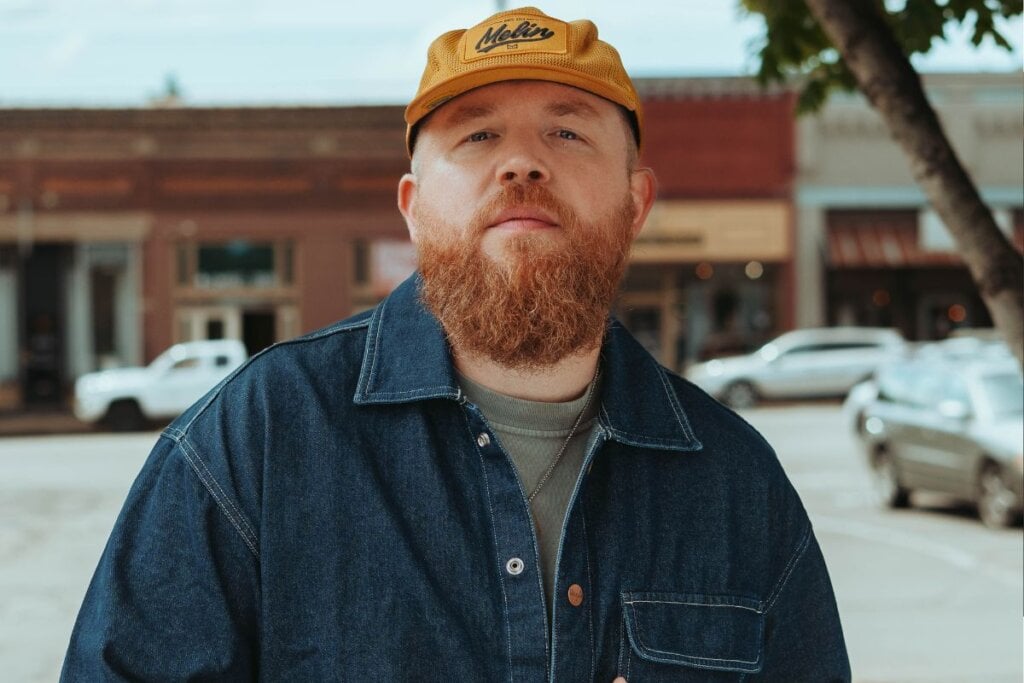
That moment when he leans into a note and the roughness in his voice reveals something that polished singing might never communicate.
That is the emotional center of Stapleton’s artistry.
He isn’t simply performing songs about ordinary people.
He sounds like he understands them.
And perhaps that connection comes from the long road he traveled before becoming famous.
The story of a musician chasing a dream is hardly unique.
Nashville is filled with people who arrive carrying guitars and hopes.
Most will never become household names.
Some will write songs for others.
Some will leave.
Some will spend decades playing small rooms.
Stapleton’s career is remarkable because he experienced much of that journey before finally stepping into the spotlight himself.
His breakthrough therefore carried a special kind of authenticity.
He wasn’t manufactured to become a country star.
He had spent years becoming a musician.
That distinction continues to matter.
In an industry increasingly shaped by streaming numbers, social-media visibility and instant attention, Stapleton represents a slower path.
A song can still take years to write.
A voice can still be developed through thousands of hours of performing.
A musician can still become famous after spending years outside the center of the conversation.
And an artist can still succeed without abandoning the musical traditions that shaped him.
Stapleton’s catalog demonstrates that repeatedly.
His version of “Tennessee Whiskey” became a cultural phenomenon, even though the song had been recorded by other artists decades earlier.
His own compositions have reached listeners because they feel lived-in rather than manufactured.
His performances continue to connect because they don’t depend on novelty.
The emotion is enough.
That may be the most important lesson hidden inside Stapleton’s career.
The dream was never simply about becoming famous.
It was about becoming good enough to make the dream worth chasing.
Every songwriting session.
Every late-night performance.
Every road trip.
Every empty room.
Every opportunity to sing for another audience.
All of it mattered.
Then eventually, the audience became enormous.
But the musician remained the same at the center.
That is why fans often describe Stapleton as authentic.
Not because he avoids success, but because success never seems to be the reason he started.
The reason was music.
The reason was the song.
The reason was the feeling that something inside him needed to be expressed.
And that is what makes his story so compelling.
Country music has always celebrated the dreamer — the person who leaves home with a guitar, follows a highway toward somewhere unknown and hopes that one day somebody will listen.
Chris Stapleton’s life has become a modern version of that story.
Only the honky-tonk signs have grown into arenas.
The small crowds have become thousands of voices.
And the young musician chasing a dream has become one of the most respected artists in American country music.
Yet the heart of the story remains unchanged.
He didn’t become a great country singer because he stopped being a dreamer. He became one because he kept chasing the music long after nobody could promise him where it would lead.


