

Before the awards, the stadiums and the countless nights beneath bright stage lights, there was a little girl in rural Oklahoma who knew music long before she knew fame.
The story above belongs to Dolly Parton and the beloved memory behind “Coat of Many Colors,” not Carrie Underwood. But its central idea — that love, family and humble beginnings can become more valuable than anything money can buy — offers a fitting way to examine Underwood’s own journey.
Because long before Carrie Underwood became a country superstar, there was simply a girl growing up in a small Oklahoma community, surrounded by family, church and music.
Those early experiences would eventually become part of the foundation beneath one of the most successful careers in modern country music.
Underwood was born in Muskogee, Oklahoma, and grew up in the nearby rural town of Checotah. Her childhood was far removed from the polished world of Nashville.
There were no stadium lights.
No international tours.
No award-show red carpets.
Instead, there was a small-town upbringing and a strong connection to family and faith.
Those elements would remain visible throughout her career.
Underwood began singing at a young age and eventually performed locally before an unexpected opportunity changed everything.
In 2005, she auditioned for American Idol.
What followed became one of the most remarkable rises in contemporary country music.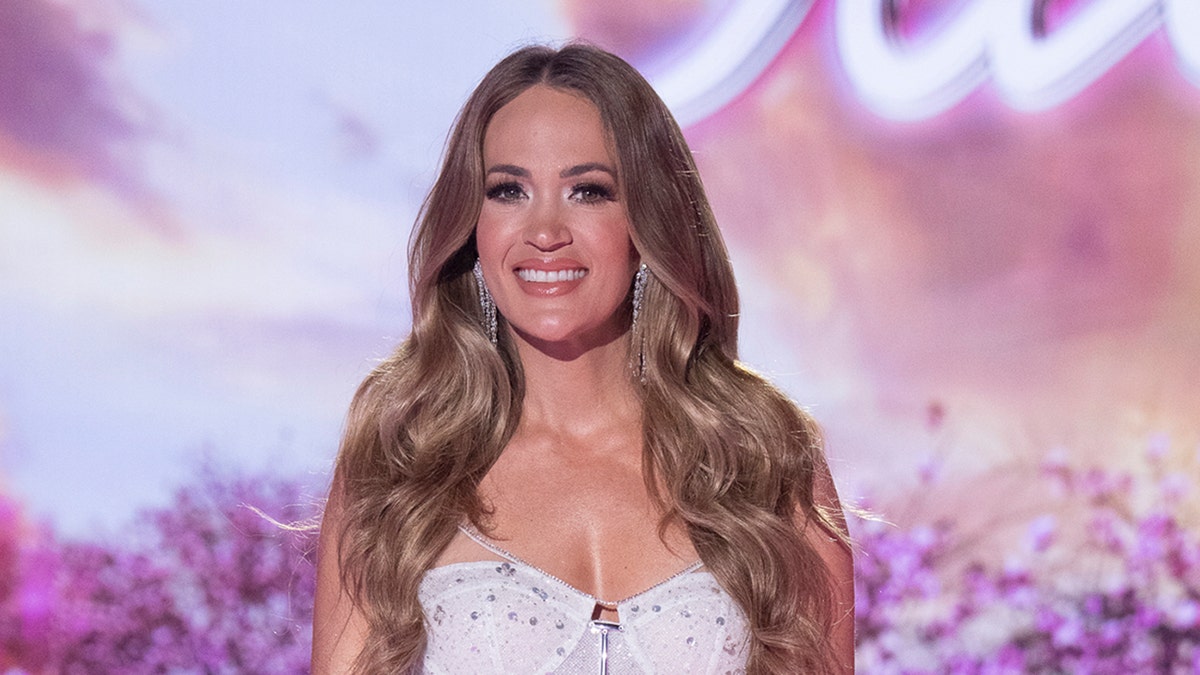
Millions watched as the young singer progressed through the competition.
Then came the finale.
Underwood won.
Almost immediately, the country music industry had a new star.
But her story did not begin with television.
The television audience was simply the first enormous audience to discover what people around her had already seen.
She could sing.
And more importantly, she could make people feel something.
Her debut album, Some Hearts, arrived later in 2005 and became a major commercial success.
The songs established several sides of her personality.
“Jesus, Take the Wheel” connected her powerful voice with themes of faith and surrender.
“Before He Cheats” revealed a sharper, more rebellious side.
The contrast was important.
Underwood was not easily reduced to one image.
She could be vulnerable.
She could be fierce.
She could be joyful.
She could be deeply reflective.
That range would become one of her greatest strengths.
Yet underneath the superstar image remained the influence of her upbringing.
Like many country artists, Underwood’s music frequently returns to familiar themes: home, family, faith, perseverance and the complicated emotions of ordinary life.
Those themes resonate because they don’t require wealth or fame to understand.
A person can be driving an old pickup truck or sitting in a luxury car and still understand heartbreak.
Someone can live in a mansion or a small house and still know what it means to miss home.
A person can stand before thousands of people and still need the same comfort they once found around a family table.
That is one of the reasons country music has always valued stories of humble beginnings.
They remind audiences that success doesn’t erase where someone came from.
For Underwood, that connection to home has remained important.
Even after achieving international fame, she has continued to speak about the importance of her Oklahoma roots and the values that shaped her.
That matters because fame can create distance.
The larger the career becomes, the harder it can be for audiences to see the person who existed before the celebrity.
But the most enduring artists often find ways to preserve that connection.
They carry pieces of home with them.
Sometimes it’s a song.
Sometimes it’s a memory.
Sometimes it’s a value learned from family.
And sometimes it’s simply the understanding that success isn’t the same thing as worth.
That idea sits at the heart of the story behind Dolly Parton’s patchwork coat, even though that particular story belongs to Parton.
A child sees scraps.
A mother sees something beautiful.
The world laughs.
The child remembers love.
Years later, the memory becomes a song.
That transformation is powerful because it illustrates something larger about country music.
The genre has always had an extraordinary ability to turn ordinary experiences into lasting stories.
A kitchen can become a song.
A highway can become a song.
A broken heart can become a song.
A childhood memory can become a song.
And suddenly something that seemed small becomes meaningful to millions.
Underwood’s catalog follows a similar emotional tradition.
Her songs often take familiar human experiences and place them inside powerful melodies.
That is why listeners can connect with them even when their lives look completely different from hers.
Music closes that distance.
A superstar can sing about faith, love or uncertainty, and someone listening thousands of miles away can still think, That’s exactly how I feel.
That may be the real measure of a successful country artist.
Not simply how many records were sold.
Not how many awards sit on a shelf.
But how many people found something of themselves in the music.
Underwood has certainly achieved the commercial milestones.
She has earned major awards, sold millions of records and become one of country music’s most recognizable performers.
But the deeper story is the journey from a small Oklahoma town to some of the world’s biggest stages.
That journey matters because it demonstrates how far talent can travel when it is supported by discipline, faith and persistence.
And perhaps the most beautiful part is that the girl who once sang far from the Nashville spotlight did not need to become someone completely different to succeed.
She brought her roots with her.
She brought her voice.
She brought her values.
She brought the stories.
The stages simply became larger.
Today, when Underwood walks onto an arena stage, thousands of people may see a superstar.
But beneath the lights is still the foundation built long before fame arrived.
Family.
Faith.
Home.
Music.
And the understanding that the things with the greatest value are not always the things that shine.
Sometimes they are the memories nobody else sees.
Sometimes they are the lessons passed down by parents.
Sometimes they are the simple moments that become priceless only years later.
Because the greatest country stories have never really been about what people owned. They have been about what they loved — and what they carried with them when everything else changed.


