

A Song Never Meant for the World
For more than a decade, Mick Jagger held onto a song that, by all accounts, was never meant to be heard.
It wasn't written with an audience in mind. There were no producers waiting, no studio sessions scheduled, no plans for release. It lived quietly—existing only in fragments of melody and memory, shaped in moments that rarely find their way into public view.
This was not a song of spectacle. It was a song of loyalty.
The kind forged not through grand declarations, but through shared time, mutual respect, and an understanding that doesn't need to be explained. Those closest to Jagger suggest it reflected a bond between men who communicated more through presence than words—men who understood each other without performance.
And for years, that was enough.
Jagger never recorded it. Never performed it. Never even hinted that it existed. To him, some things carried too much truth to be turned into something public.
The Quiet Influence of Charlie Watts
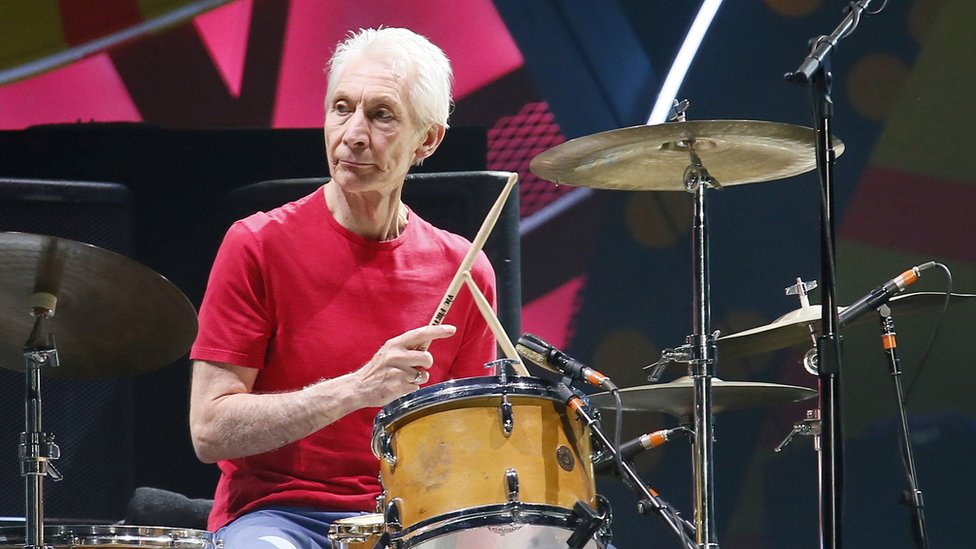
Many believe the song was deeply connected to Charlie Watts, a revered figure in rock music whose influence stretched far beyond the stage.
Watts was known not just for his precision behind the drums, but for his restraint, elegance, and quiet presence—qualities that defined the heartbeat of The Rolling Stones for decades. While others commanded attention, Watts anchored it, offering a steady rhythm that allowed everything else to shine.
Though their roles within the band were vastly different, Jagger and Watts shared something deeper than performance. Together, they helped shape one of the most enduring legacies in music history, built on instinct, trust, and an unspoken musical language.
Their connection, while rarely dramatized, was rooted in mutual respect and a shared understanding of what it meant to stay true—both to the music and to each other.

If Jagger's hidden song was about anything, it was about that kind of connection.
A Loss That Changed Everything
For years, the song remained untouched—almost frozen in time.
But everything shifted when news broke that Charlie Watts had passed away at the age of 80.
The loss sent ripples through the music world, but for Jagger, it marked something more personal. It was not just the passing of a bandmate, but the closing of a chapter that had defined much of his life.
And in that moment, the meaning of the song changed.
What had once been a quiet reflection of brotherhood became something else entirely—a farewell.
The melody did not change. The words remained exactly as they had been written. But the weight behind them transformed.
Because now, the song was no longer about a bond still living.
It was about a bond remembered.
When Meaning Outgrows Music
There are songs that evolve over time through revisions and reinterpretations. Artists rewrite lyrics, rearrange compositions, and adapt their work to reflect new perspectives.
Jagger chose a different path.
He left the song exactly as it was.
No additions. No edits. No attempt to reshape it for public consumption.
Instead, he allowed its meaning to evolve naturally—shaped not by artistic decisions, but by life itself.
In doing so, the song became something rare: a piece of music that changed without changing.
What once carried the quiet strength of presence now echoed with absence. What once spoke of loyalty in real time now carried the weight of memory.
It was no longer just a song.
It was a moment.
A Glimpse Into a Private World
Throughout his career, Mick Jagger has built a reputation as one of rock's most electrifying performers—a figure synonymous with energy, charisma, and reinvention.

But this story reveals something quieter.
This is not a narrative crafted for a stadium or shaped for spectacle. It is not designed to reach millions or to fit within the expectations of a global audience.
Instead, it offers something far more intimate—a rare glimpse into a part of Jagger's life he chose to keep hidden.
The decision to let the song be heard now has sparked quiet curiosity among fans and observers.
Why now?
Why this song?
And what did it truly mean in the years it remained unheard?
The Power of What Remains Unspoken
Perhaps what makes this story resonate so deeply is not just the music itself, but the silence that surrounded it for so long.
In an era where artists are often expected to share everything, Jagger chose to hold something back. He allowed the song to exist without explanation, without exposure, without expectation.
And in doing so, he preserved its authenticity.
Because some connections are too personal to be defined. Some emotions are too complex to be translated. And some songs are not meant to be heard—until the moment they carry the most meaning.
More Than a Goodbye
Now, as the song finally steps into the light, it carries with it more than melody and lyrics.
It carries history.
It carries loss.
And above all, it carries the moment when something deeply personal became something permanent.
For listeners, it may sound like a tribute—a quiet, reflective goodbye.
But for Mick Jagger, it is likely something far simpler, and far heavier.
A memory, set to music.