

What began as a routine morale visit ended as one of the most repeated stories among the service members who were there: a country star refusing to leave when things got tense, insisting on doing the one job he came to do—sing for the soldiers.
Blake Shelton has spent much of his public life under arena lights, backed by big production and the familiar rhythm of sold-out shows. But for many U.S. service members stationed far from home, the moments that stick aren't the award speeches or TV appearances. They're the nights when an artist shows up in the most ordinary, high-pressure places—bases with dust in the air, floodlights on the perimeter, and schedules built around security briefings.
According to accounts shared by troops and people familiar with the visit, Shelton was part of a support trip to perform for deployed personnel at a remote installation overseas. It was the kind of stop meant to break the monotony: a short performance, a few photos, a reminder of home.
Then the situation changed.
A Routine Arrival Turns Tense

As the group prepared to move toward the performance area, an alert circulated through the base: reports of incoming mortar fire in the broader vicinity. In deployed environments, even vague warnings shift the mood instantly. Movements pause. Routes change. Everyone waits for instructions that may come quickly—or not at all.
Those present describe a brief window of confusion and heightened awareness. Personnel moved with urgency. Security teams tightened control of access points. The performance plan—already modest compared to a typical concert—seemed likely to be canceled entirely.
For the troops, these moments are part of reality. For visiting civilians, it can be jarring: the reminder that the "venue" is also a workplace where danger is never fully off the table.
Shelton and his team, according to those accounts, were advised to remain in a secured area while commanders assessed the situation.
The Question Everyone Asked
When the immediate danger appeared to ease and the base returned to a more controlled posture, the obvious question surfaced: was the show still happening?
In deployments, entertainment events are often the first thing to be scaled back when conditions change. A performance can be rescheduled—or quietly dropped—without explanation. No one blames the artist. In fact, most troops understand the logic: safety comes first.
But several witnesses say Shelton's response was direct.
He reportedly looked toward the service members who had just gone through the tense minutes alongside the visiting group and said a version of the same point: if the soldiers were still doing their jobs, he could do his.
It wasn't delivered as a dramatic speech. It was framed as simple responsibility.
A Stage That Didn't Look Like a Stage

Later that night, Shelton walked onto a temporary platform set up on base—more practical than glamorous, bordered by equipment and lit by work lights rather than theatrical rigs. There were no elaborate introductions, no long warm-up set, no special effects.
The crowd, made up largely of uniformed service members, responded the way troops often do when something feels real: with loud appreciation at first, then a kind of focused stillness once the music begins.
People who were there describe the atmosphere as different from a normal concert. In an arena, fans are there to celebrate and escape. On a base, the songs tend to hit a different nerve—because many of the lyrics are about the very thing people miss.
Home. Family. Ordinary nights. The freedom to be bored.
Shelton's catalog has always leaned into familiar American imagery: small-town identity, relationships, humor, and a steady pride in where you come from. In that environment, the themes didn't feel like branding—they felt like a bridge.
Why the Gesture Mattered More Than the Setlist
Troops who later shared the story often emphasized that the music itself—while appreciated—wasn't the main point. The main point was that the performance happened at all, after everyone had been reminded how quickly circumstances can turn.
In the military, the idea of "showing up" has deep cultural meaning. It's what service members do for one another. It's what they expect from leadership. When someone from the outside world chooses to stay, to follow through, it can register as respect.
That's why, according to multiple accounts, the moment became a story retold across units: not because Shelton performed a perfect vocal run, but because he didn't treat the danger as a reason to disappear.
"He didn't have to do it," one former service member wrote in a post recalling the night. "But he did. And we noticed."
Entertainment as Morale, Not Distraction
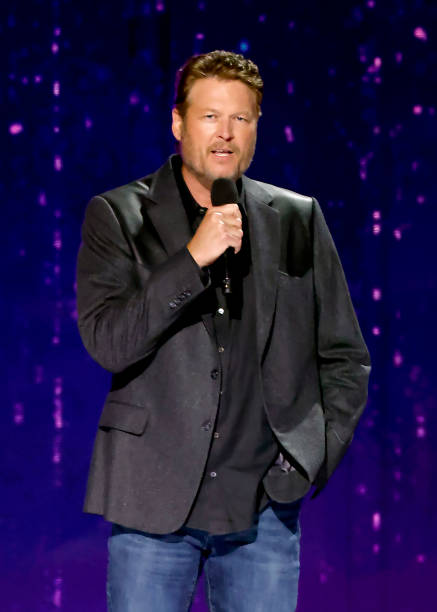
USO-style performances and morale visits have a long history in American military life. Supporters argue they provide more than entertainment: they offer a psychological reset, a reminder that the country remembers those deployed, and a brief chance to feel connected to a normal life.
Critics sometimes dismiss such events as symbolic. But service members often describe them differently. In high-stress environments, a single hour that feels human can be valuable—especially when it comes after long stretches of routine and uncertainty.
Shelton, like many mainstream artists who have participated in military support events, isn't a policymaker and doesn't claim to be. But in these settings, performers are rarely judged by politics. They're judged by presence: whether they show up, how they treat people, whether the interaction feels sincere.
The Night Soldiers Talk About
By the end of the performance, accounts say the crowd response was intense—part gratitude, part adrenaline, part release. Some troops sang along. Others recorded short clips. Many simply stood and watched, soaking in the rare shift of atmosphere.
Those who later reflected on the moment often described it as something they carried with them—not because it changed the deployment, but because it changed the night.
In a place where the days can blur together, a single event can become a marker in memory: the night an alert came through, the plan nearly fell apart, and the artist stayed anyway.
A Reminder of What "Support" Looks Like
In the public eye, "supporting the troops" can become a slogan—something easy to say and hard to define. For the service members who remember nights like this, support is often measured in smaller actions: time, effort, and follow-through.
That's why the story continues to circulate in military communities and among Shelton's fans. It isn't a headline about celebrity bravery. It's a story about a choice—one that, to the people who lived it, felt meaningful.
Blake Shelton didn't have to walk onto that makeshift stage.
But according to those who were there, he did.
And years later, that decision still gets repeated in the simplest way possible: he stayed, and he sang—because the soldiers were still there too.