

A Recognition That Landed Like More Than a Headline
TIME Magazine's annual "Top 100 Most Influential People" list has long served as a cultural snapshot—part celebration, part signal of who continues to shape public life beyond their own industry. This year, one name has carried a uniquely emotional weight: Willie Nelson, recognized at 93 for a lifetime of influence that reaches far beyond country music.
In most years, a TIME honor generates predictable reactions—congratulations, reposts, and a brief spike of attention before the world moves on. But Willie's inclusion has prompted something different. The response hasn't just been pride. It has been tenderness—an awareness that when a figure has lived long enough to become a symbol, every major recognition feels less like routine and more like a moment the world wants to hold onto.
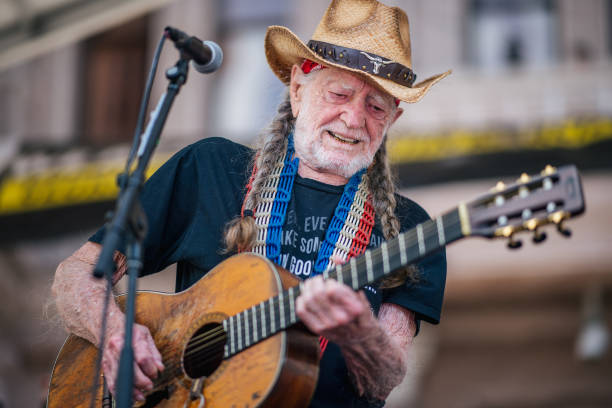
Willie Nelson is not simply a chart story. He is an American cultural reference point: the calm outlaw voice, the worn guitar, the plainspoken songwriting that made millions feel understood. That influence did not arrive through spectacle. It arrived through endurance.
Why Willie's Influence Has Never Needed Volume

Willie's career has always been a lesson in how influence can be quiet and still be immense. He didn't build his legacy by chasing what was fashionable. He built it by protecting what was true: songs that sound lived-in, stories that refuse to posture, and performances that prioritize meaning over perfection.
That steadiness is part of why his influence has crossed boundaries that usually separate musical worlds. Willie has been embraced by country traditionalists, progressive songwriters, road-worn working-class listeners, and younger audiences who weren't alive when many of his signature records first appeared. In an era where attention is often engineered through noise, Willie's impact has come from restraint—his ability to stand still and still move a room.
TIME's recognition, then, reads not like a sudden coronation, but like an institutional acknowledgment of something audiences have known for decades: Willie helped define what authenticity sounds like in American music.
The Understated Presence That Keeps Defining Willie Nelson
People who have been around Willie in professional settings often describe the same thing: he arrives without theatricality. No dramatic entrance. No need to dominate the room. His presence tends to register slowly, then completely—like a song that doesn't hit you in the first line but stays with you for years.
That quality has become part of his public mythology, but it also explains why this particular honor is resonating so strongly. When someone has spent a lifetime refusing to chase spotlight, formal recognition carries a different kind of symbolism. It feels like the world meeting him where he has always been: grounded, consistent, and quietly consequential.
Willie's influence also extends into the ethics of artistry—how to keep showing up, how to keep making work that feels human, how to remain recognizably yourself even as the culture changes around you. That's not a skill you can manufacture late in a career. It is a lifetime of decisions.
The Unspoken Question Behind the Celebration
Alongside the congratulations, there's an undertone that has been impossible to miss: fans wondering—carefully, quietly—whether the world will get many more chances to honor Willie at this scale.
At 93, the question isn't sensational; it's natural. Time changes everything, even for legends. And people who have grown up with Willie's music are acutely aware that a living icon is still, ultimately, a living person—subject to fatigue, age, and the reality that touring and public appearances become harder.
That concern has shaped the emotional tone of the celebration. For many, this isn't just about Willie being recognized as influential. It's about Willie being recognized while he can still feel it, while he can still understand what his work meant to people, while he can still receive the gratitude rather than have it delivered after the fact.
Importantly, fans aren't treating this as a farewell announcement. They're treating it as a reminder: appreciation shouldn't wait until it's too late. In that sense, the TIME honor has become a focal point for a much larger public feeling—the desire to say thank you in real time.
"What's Real Lasts": Why the Line Fits Willie Better Than Any Speech
One line attached to the viral conversation around this recognition captures Willie's career ethos: "What's real lasts." Whether spoken directly or used as a shorthand by admirers, the sentiment reflects why Willie's name belongs in any discussion of long-term influence.
Real lasts because it doesn't depend on trends to survive. Real lasts because it meets people where they are. Real lasts because it continues to work even when the culture changes its mind about what it wants.
Willie's music has lasted in exactly that way. His songs have been woven into American life—played at weddings, funerals, road trips, lonely nights, and everyday moments when people need something steady. That is a different type of influence than a headline cycle. It's emotional infrastructure.
And that is why this recognition is landing with such force: Willie didn't just shape a genre; he helped shape how people talk about love, loss, freedom, regret, humor, and resilience.
A Legacy That Doesn't Need to Be Proved—Only Acknowledged

TIME's list often functions as a declaration of present-tense relevance. In Willie Nelson's case, relevance isn't new—it's continuous. His influence has persisted through decades of industry reinvention because it was never built on novelty. It was built on truth.
For younger artists, Willie represents artistic permission: to sound imperfect, to tell the story plainly, to value sincerity over polish. For older fans, he represents continuity—a voice that still feels familiar when everything else changes too quickly.
That is the rarest kind of influence: the kind that doesn't spike and fade, but settles into the culture like a permanent landmark.
Why This Moment Feels Like the World Paused—Even Briefly
If you strip away the list format and the media framing, what remains is simple: people are emotional because Willie Nelson has given them something they used to survive their lives.
That's what makes this honor feel different. It isn't only recognition for a career. It's recognition for a relationship—between an artist and an audience that has carried each other across decades.
Willie never chased influence. He didn't need to. He earned it the slow way—through consistency, honesty, and the stubborn decision to keep making music that sounds like life.
And for many fans reading this year's list, the most important part isn't that Willie is included. It's that the world is still able to say it out loud while he's here:
He mattered. He still matters. And what's real lasts.