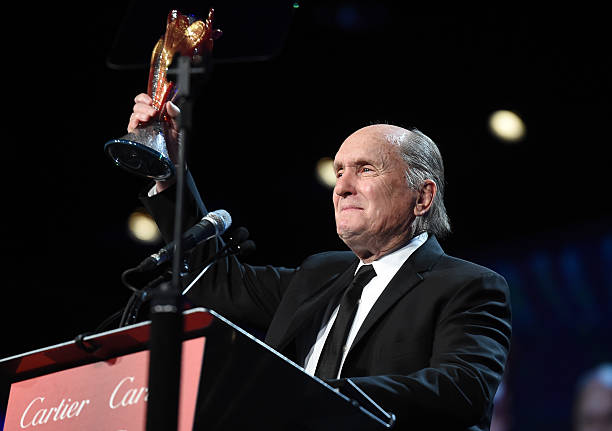
London — February 2026
The news moved quickly, but the reaction did not feel frantic. When reports confirmed that Robert Duvall had died, the response across industries was less explosive than reverent — a collective pause rather than a public spectacle. In that pause, tributes emerged from every corner of culture. Among them was a quiet acknowledgment from Ringo Starr, a figure whose own legacy was forged in the same era that Duvall helped define.
Duvall's career spanned decades, but certain roles became permanent fixtures in the American imagination. As Tom Hagen in The Godfather, he delivered calm intelligence in a world defined by volatility. In Apocalypse Now, his portrayal of Lt. Colonel Kilgore became cinematic folklore — measured, intense, and unforgettable. His performances did not chase applause; they earned permanence.

Ringo Starr, rising to global prominence during the 1960s cultural shift, belonged to the same generational surge that redefined creative expression on both sides of the Atlantic. Though music and film travel different artistic paths, the late 20th century saw their influence intertwine. The Beatles reshaped youth identity and sound; Duvall and his contemporaries reshaped narrative realism in American cinema. Both forces disrupted convention. Both altered expectation.
Sources close to Ringo described his reaction as restrained but heartfelt. There was no dramatic speech, no extended commentary. Instead, there was recognition — one cultural architect acknowledging another. For artists whose careers stretch across half a century, respect often speaks more loudly in brevity than in elaborate tribute.
Industry observers note that figures like Duvall represent a period when performance emphasized discipline and depth over spectacle. The same could be said of Ringo's drumming style — understated yet essential, subtle yet structurally foundational. In different mediums, both men embodied a similar artistic philosophy: let the work carry the weight.
The passing of Duvall has reignited conversations about durability in art. In a digital era dominated by rapid cycles of attention, his body of work stands as evidence of craft built patiently over time. Likewise, Ringo's continued presence on stage into his eighties signals longevity anchored in authenticity rather than reinvention for its own sake.

As tributes continue to flow from actors, directors, musicians, and public figures worldwide, the tone remains consistent — gratitude rather than dramatics. Duvall was not merely a performer; he was a benchmark. His roles shaped how seriousness, authority, and emotional restraint could exist on screen without excess.
For Ringo Starr, whose career has also been defined by steadiness rather than theatrical self-promotion, joining that chorus of remembrance feels natural. Their paths did not frequently cross publicly, yet they were part of the same cultural wave — artists who rose when the world was recalibrating what creativity could look like.
In moments like this, the boundaries between industries blur. Film and music become part of the same conversation about influence and endurance. A generation that once filled theaters and stadiums now watches its icons pass into history, one by one.
There were no fireworks in Ringo's acknowledgment. Just respect.
And sometimes, in the face of legacy, that is enough.