

NASHVILLE, Tenn. — In a music industry often driven by reinvention, spectacle, and constant visibility, few partnerships have endured with the quiet authority of Willie Nelson and Kris Kristofferson. They were never marketed as rivals. They never competed for dominance. And yet, when they shared a stage — or simply existed in the same musical era — the impact was unmistakable.
Together, Nelson and Kristofferson represented a strain of country music that did not depend on volume or flash. It was rooted in character, restraint, and a deep respect for the power of storytelling. Decades after the peak of the outlaw movement they helped define, their connection continues to resonate — not because they chased trends, but because they refused to.
The Outlaw Movement Was Never About Noise
In the 1970s, country music faced a crossroads. The polished "Nashville Sound" dominated radio, favoring orchestration and crossover appeal. Against that backdrop, a group of artists — later labeled "outlaws" — began pushing back. They sought creative control, raw production, and songs that reflected real life rather than industry formulas.
Willie Nelson and Kris Kristofferson stood at the center of that shift.
Nelson, with his unconventional phrasing and stripped-down arrangements, broke nearly every rule of traditional country singing. His voice, thin yet emotionally piercing, often lagged slightly behind the beat — a style that felt conversational rather than performative.
Kristofferson, meanwhile, brought a different kind of rebellion. A former Rhodes Scholar and Army officer turned songwriter, he infused country music with literary depth. His lyrics explored loneliness, moral ambiguity, and existential reflection with a clarity rarely heard on mainstream country radio at the time.
If Nelson was the drifter-poet of the open road, Kristofferson was the philosopher with a guitar.
Together, they reshaped the genre's emotional landscape.
A Brotherhood Forged Beyond the Spotlight

Though they were distinct artists, their bond extended beyond professional collaboration. They toured together, wrote alongside one another, and later joined forces in The Highwaymen, the supergroup that also included Johnny Cash and Waylon Jennings.
Yet even within that high-profile ensemble, the connection between Nelson and Kristofferson stood out. Their harmonies were not showy. Their stage banter was understated. The chemistry came from shared values rather than theatrics.
Observers who worked with them during those years often described a relationship built on mutual respect rather than ego. There was no competition for attention, no visible hierarchy. Each understood the other's role in shaping the broader movement.
"They didn't try to out-sing or outshine each other," said one longtime Nashville producer. "They trusted the song."
Songs Built on Character, Not Volume
What distinguished both men — individually and together — was their commitment to songwriting as character study. Kristofferson penned tracks like "Sunday Mornin' Comin' Down" and "Me and Bobby McGee," giving voice to flawed, searching protagonists who felt startlingly human. Nelson responded with songs such as "Blue Eyes Crying in the Rain" and "Angel Flying Too Close to the Ground," embracing emotional honesty over vocal bravado.
When they performed together, those sensibilities merged seamlessly.
Their duets were rarely explosive. Instead, they were measured. Controlled. Often quiet.
In a concert setting, that restraint created an unusual dynamic: audiences leaned in rather than cheered over the music. The strength came not from volume but from authenticity.
For many longtime listeners, that is precisely why their partnership still matters.
Aging With Integrity

As the decades passed, country music shifted dramatically. Production grew louder. Visual presentation became central. Younger artists often cycled through stylistic reinventions to maintain relevance.
Nelson and Kristofferson took a different path.
They aged without attempting to disguise time. Their voices changed — roughened, softened, slowed — but they did not attempt to restore them to youthful clarity. Instead, they allowed experience to deepen the meaning of their songs.
This refusal to chase reinvention became, in itself, a statement.
In an era defined by constant updates, they embodied continuity.
Older audiences, in particular, recognized this quality immediately. The music did not demand attention; it earned it. It did not beg for applause; it trusted silence.
Why Their Connection Still Resonates
Today, as country music spans a wide range of subgenres — from pop-infused crossover hits to traditional revivalist acts — the legacy of Nelson and Kristofferson occupies a steady space in the genre's foundation.
For many listeners, their partnership symbolizes a time when country music prioritized narrative depth over commercial calculation. It represents a belief that dignity can exist within popular art — that storytelling need not be sacrificed for speed.
Music historians often note that the outlaw movement was less about rebellion for its own sake and more about creative autonomy. Nelson and Kristofferson demanded control not to provoke, but to preserve authenticity.
That shared principle became the backbone of their quiet partnership.
The Sound of Endurance
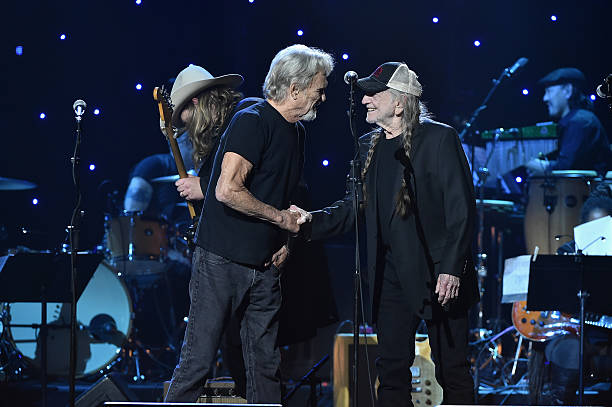
When audiences revisit recordings of Nelson and Kristofferson together — whether live performances or studio collaborations — what stands out is not spectacle but steadiness.
Their harmonies are often understated, almost conversational. Their delivery suggests two men who trust both the lyric and each other. There is space in the music, room for reflection.
In a culture that often equates power with amplification, they offered a different model: power as patience.
That model has aged well.
Younger artists frequently cite both men as influences — not necessarily for their vocal style, but for their artistic independence and lyrical honesty.
"They showed that you don't have to shout to be heard," one contemporary singer-songwriter said in a recent interview. "You just have to mean it."
A Legacy That Outlasts Trends
While country music continues to evolve, the partnership between Willie Nelson and Kris Kristofferson stands as a reminder of something increasingly rare: endurance without compromise.
They did not build their careers around chasing cultural shifts. They built them around songs strong enough to survive those shifts.
And perhaps that is why their connection still resonates decades later.
Not because it was loud.
Not because it dominated headlines.
But because it felt rooted.
In the end, Nelson and Kristofferson represent more than a shared era. They represent a philosophy: that character can be heard in a voice, that restraint can carry more weight than spectacle, and that some of the strongest bonds in music are the ones forged quietly.
Two outlaws.
One enduring truth.
Proof that the strongest voices don't shout.
They endure.