

A recognition that didn't arrive with noise
In a culture trained to measure influence by volume—by trending hashtags, viral clips, and carefully staged moments—Jon Bon Jovi's newest milestone is being talked about for a different reason: the way it happened, and the way he carried it.
According to the story being shared, Jon Bon Jovi walked in without an entourage. No cameras chasing him down a hallway. No prepared speech built for headlines. Just calm focus, a familiar steadiness, and the kind of presence that doesn't ask to be noticed but always is.
When someone nearby suggested that influence today is all about noise, Jon reportedly smiled and replied with a line that immediately became the emotional center of the moment:
"Purpose lasts longer."
Minutes later, he wasn't stepping onto a stage. He was stepping into history—named one of TIME's Most Influential People, a recognition framed not as hype, but as something earned.
Why this recognition feels different
The phrase "most influential" is used so often it can start to blur. But in Jon Bon Jovi's case, the recognition is being received less like a trophy and more like a verdict: that influence is not only about what a person makes, but what they do with the power that comes from being heard.
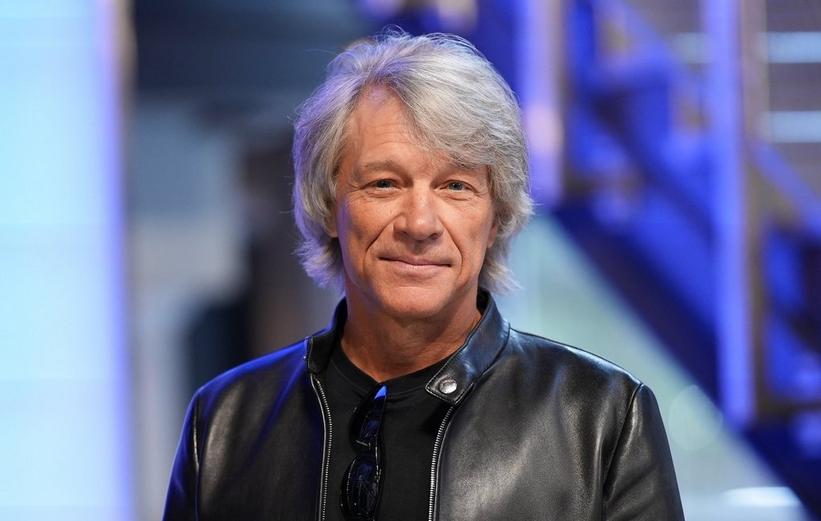
For decades, Jon has occupied a rare space in American culture: a rock icon with stadium-level fame, but also a public figure whose identity has expanded beyond music. He isn't remembered only for the anthems that defined eras. He is remembered for what those anthems meant to people—and for how he tried to live in alignment with them.
That combination is exactly what makes the TIME recognition feel less like a celebrity honor and more like a broader cultural signal: the idea that compassion, service, and sustained commitment still count as influence, even in an age that rewards spectacle.
The music: anthems that became emotional architecture
Jon Bon Jovi's songs have always moved like gasoline and prayer at the same time. The hooks are huge, built for arenas, built for thousands of voices to shout together. But under the choruses, the stories have always been about real people: the ones trying to get through the week, the ones holding on in silence, the ones learning how to survive disappointment without losing their belief in tomorrow.
That's why tracks like "Livin' on a Prayer" and "It's My Life" didn't just dominate radio—they became something closer to emotional infrastructure. People didn't just listen to them. They leaned on them. They played them in cars after bad news. They played them while packing boxes, ending relationships, rebuilding lives. They played them when they needed a reminder that endurance can sound like music.
It's easy to dismiss rock anthems as loud nostalgia. But anyone who has watched a crowd sing those songs back understands the deeper truth: they don't only entertain.
They steady people.
And that's a kind of influence you don't measure in streams.
The part that goes beyond rock: turning fame into responsibility
What has separated Jon Bon Jovi from many peers is not that he became famous, but that he treated fame as leverage. In the story circulating around this recognition, that's the central claim: Jon didn't just build a career. He built a life that tried to match the values his music preached—resilience, dignity, compassion.
Over the years, Jon and his wife Dorothea have been associated with community-based efforts centered on food insecurity, housing stability, and hands-on service. Supporters often describe their approach in the simplest possible terms: they don't just donate.
They show up.
They listen.
They stay.
And that matters, because it is the difference between charity as a moment and service as a commitment. In a public world full of one-time gestures, the repeated choice to return—again and again—becomes its own kind of credibility.
Even for people who don't follow charity work closely, the idea resonates: that someone who could easily remain insulated by fame chose instead to make proximity part of the point.
A modern definition of influence
Influence has changed shape in the last decade. It's been flattened into metrics: follower counts, engagement rates, headlines per week. But the Jon Bon Jovi story offers a different definition—one built on longevity.
Influence, in this framing, is not about being the loudest in the room.
It's about still being trusted in the room after thirty or forty years.
That kind of trust doesn't happen by accident. It's built through consistency: saying the same thing with your work and your behavior, showing up when the cameras aren't necessary, and refusing to let cynicism fully replace kindness.
That's why the reported line—"Purpose lasts longer"—landed the way it did. It wasn't a clever quote. It was a thesis statement. It suggested that Jon Bon Jovi's influence is not built on constant reinvention or controversy, but on something simpler: a steady willingness to use his platform to serve, not just to shine.
Why people are reacting so emotionally
The emotional reaction to this recognition isn't only about a famous musician receiving an honor. It's about what the honor represents to people who feel exhausted by the culture around them.
Many fans are tired of a world where power looks like domination and influence looks like chaos. A story like this offers relief: the possibility that kindness can still be culturally meaningful.
It tells people that you don't have to be cruel to be powerful. That you don't have to be loud to be heard. That you can be influential without constantly trying to win.
And for fans who have carried Jon's music through their hardest seasons, the recognition feels personal. Because to them, Jon wasn't influential in an abstract way. He was influential in the most direct way possible: his songs helped them hold on.
The moment that made it feel like history
If the details being shared are accurate, the most striking part of the night wasn't the announcement itself. It was the contrast.
A world that expects celebrities to arrive like a parade watched Jon Bon Jovi arrive like a person. A culture that expects influence to demand attention watched him treat recognition like responsibility. A room that might have expected a grand speech instead received a quiet line about purpose.
And that contrast is exactly why the story is spreading.
Because it suggests that influence, at its best, isn't about building yourself bigger.
It's about building something bigger than yourself.